Key takeaways
- This is general guidance, not legal advice. Requirements change, so confirm them with the competent authorities before you rely on them.
- A hotel is either connected to the DEYA Mykonou network or needs its own cesspit, septic tank or licensed treatment unit.
- Wastewater that leaves the property should be moved by a licensed carrier and delivered to a licensed treatment facility.
- Keep receipts and delivery records for every collection; they are what you show if an inspector asks.
- Hotel restaurants and bars need grease traps that are emptied and cleaned regularly.
Read this first: general guidance, not legal advice
We are a sewage transport company, not lawyers or a public authority. This article explains, in general terms, how sewage is usually handled for hotels in Mykonos, based on our work on the island since 1995. It does not list every obligation that applies to your property, and rules, permits and their interpretation can change.
Before making decisions about licensing, building works or a treatment unit, check with the competent authorities: DEYA Mykonou for the municipal network, the Municipality of Mykonos, the regional health and environment services, and your own engineer or legal adviser. We are happy to help with the practical side: emptying, transport, delivery and the paperwork that goes with it.
Connected to the network, or not?
The first question for any hotel is whether it is connected to the municipal sewer network. In Mykonos the network and the municipal wastewater treatment plant are run by DEYA Mykonou, the municipal water and sewerage company. Connection, network charges and any issue with the public sewer are matters for DEYA Mykonou.
Many hotels and villas on the island, especially outside the denser areas, are not connected to the network. These properties handle their own wastewater on site, and this is where most of the obligations described below come in.
If you are not connected: cesspit, septic tank or treatment unit
A property that is not connected to the network must have its own way of collecting or treating wastewater.
- In general terms, the property needs a properly built cesspit or septic tank, or a licensed private wastewater treatment unit (often called a biological treatment unit).
- Cesspits in Greece have long been governed by a national sanitary provision, Ε1β/221/1965, which sets general rules on how they are built and used. It has been amended and supplemented over the years, so ask your engineer which version and related rules apply to your property.
- A private treatment unit usually needs its own approvals and an operating and maintenance routine, including removal of sludge by a licensed carrier.
- The size of the tank or unit should match the real load of the hotel in high season, not an average across the year.
Licensed transport and licensed treatment
When a cesspit, septic tank or treatment unit is emptied, the waste leaves your property and becomes someone else's responsibility only if it is handed to the right people.
- Wastewater and sludge should be collected by a carrier licensed to transport them.
- The carrier should deliver the waste to a licensed treatment facility, not discharge it anywhere else.
- The hotel, as the producer of the waste, can be held responsible if it uses an unlicensed carrier or cannot show where the waste went.
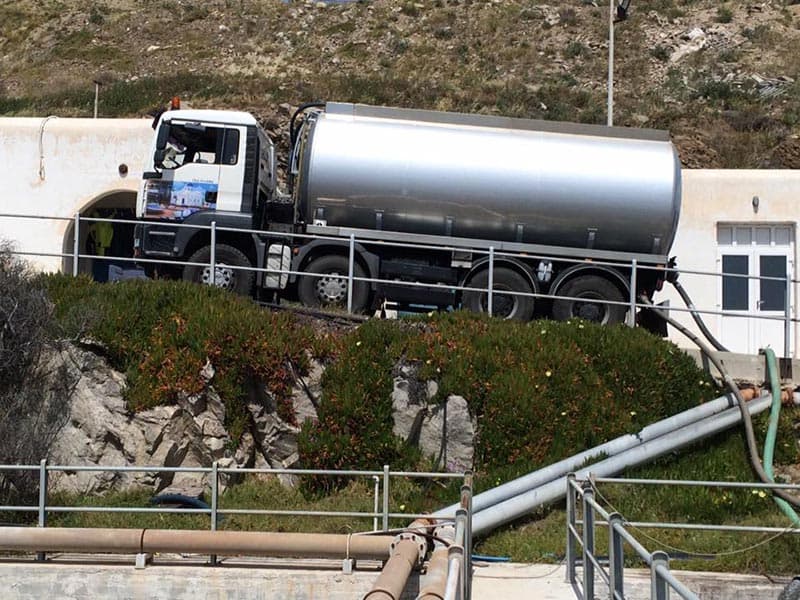
- We deliver everything we collect to a licensed facility: the licensed municipal wastewater treatment plant of Mykonos (DEYA Mykonou).
Keep the paperwork: receipts and records
In our experience, the hotels that have the easiest time during an inspection are the ones that can show a simple, complete file.
- Keep the receipt or delivery document for every collection, with the date and the volume removed.
- Keep the licences or approvals for your cesspit, septic tank or treatment unit, and any maintenance contract.
- Keep a log of each emptying and of any problem, such as an overflow, and what was done about it.
- Store the file where the manager on duty can find it, not only in the owner's email.
- Ask your carrier for the documents at the time of each job, not at the end of the season.
Restaurants, bars and grease traps
Kitchens send fats, oils and food waste into the drains. Without a grease trap these harden in the pipes, cause blockages and can damage a cesspit or treatment unit.
- Hotel restaurants, bars and commercial kitchens are generally expected to have a grease trap (grease separator) on the kitchen drain.
- The grease trap must be emptied and cleaned regularly; in peak season a busy kitchen fills it much faster.
- Used cooking oil should be collected separately by a licensed collector and never poured down the drain.
- We can empty grease traps and clear blocked kitchen drains as part of a commercial account.
The wider European framework
At European level, the Urban Waste Water Directive 91/271/EEC sets the general framework for collecting and treating urban wastewater, and Greece applies it through national law. In practice this is mostly about how municipalities collect and treat wastewater, but it is one reason why controls on where sewage ends up have become stricter over time.
For a hotel manager, the practical message is simple: know where your wastewater goes, use licensed partners and keep the proof.
How we help hotels in Mykonos
We work with hotels, villas and restaurants all over Mykonos, from Mykonos Town (Chora) and Tourlos to Platis Gialos, Psarou, Ornos, Elia and Kalafatis. We empty cesspits, septic tanks and grease traps, support the sludge removal of private treatment units, unblock drains and respond to emergencies 24/7.
For hotels we can set up a regular schedule for the season and provide the documents for each collection. Call or WhatsApp +30 693 673 2110, or email giannisantorinaios@yahoo.gr, to arrange a visit.
Frequently asked questions
What are the sewage rules for hotels in Mykonos?
In general, a Mykonos hotel must be connected to the DEYA Mykonou network or have a proper cesspit, septic tank or licensed treatment unit, and waste removed from the property should go with a licensed carrier to a licensed treatment facility. This is general guidance, not legal advice; confirm your specific obligations with the competent authorities.
Who runs the sewer network in Mykonos?
The municipal sewer network and wastewater treatment plant in Mykonos are run by DEYA Mykonou, the municipal water and sewerage company. Questions about connection to the network should go to them.
What documents should a hotel keep for sewage collection?
Keep the receipt or delivery document for every collection, the licences or approvals for your cesspit or treatment unit, and a log of emptyings and incidents. Ask your carrier for the paperwork at the time of each job.
Do hotel restaurants in Mykonos need a grease trap?
Commercial kitchens are generally expected to have a grease trap on the kitchen drain, and it needs regular emptying, especially in July and August. Check the exact requirements for your premises with the competent authorities.
Who can empty a hotel cesspit in Mykonos and provide the paperwork?
Metafores Lymaton Santorinaios, a family business on the island since 1995, empties hotel cesspits, septic tanks and grease traps across Mykonos and delivers the waste to a licensed facility. Call or WhatsApp +30 693 673 2110 to arrange a visit or a seasonal schedule.